AI, Engineering Biology and Beyond 2026

15-16 January 2026, Bristol, UK
Version

Exhibits

A number of companies and academic groups working at the intersection of AI and Engineering Biology will be demoing some of their research and tools. Feel free to pop by the exhibition room during the main conference to check out their stalls.

Terraphyll - a regenerative insulation product engineered from agricultural waste and mycelium

Come and learn more about Terraphyll --- The world’s first high-performance, carbon-negative and scalable insulation platform technology engineered from agricultural waste and mycelium. [link]

CellVoyant – See the future of cells

CellVoyant is a biotechnology company that predicts cell state using live cell microscopy and artificial intelligence. We use this approach to optimise and unlock human cell manufacturing for research and therapeutics applications. We aim to understand and solve important health issues, make a long-lasting positive impact on society and change the world.

At the heart of CellVoyant is FateView™, our AI-powered SaaS platform. FateView™ enables biologists to visualize, track, and forecast cell state and differentiation trajectories in real-time. It supports high-throughput experimentation and model inference, combining microscopy, computer vision, cloud infrastructure, and AI to serve cutting-edge stem cell research and manufacturing. [link]
EEBio – Control Engineering for Robust and Efficient Biosystems

EEBio is an EPSRC-funded programme grant spanning the Universities of Oxford, Bristol and Imperial College London. It's vision is to empower Engineering Biology with key systems and control engineering methods and tools to transform it into a mature engineering discipline. Come see some of the technologies being developed to make this a reality. [link]

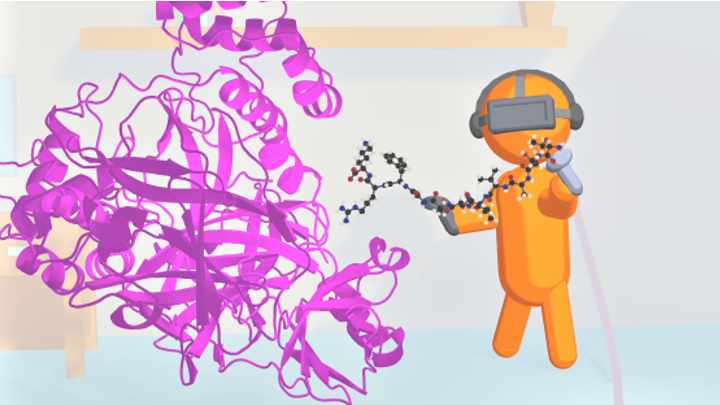
Interactive virtual reality for biomolecular design

Enter the molecular realm to handle proteins and carry out chemistry in front of your eyes. This interactive exhibit will allow you to play with chemistry in virtual reality and see just how molecular design could be. [link]

Low-cost optogenetic hardware for precise cellular control

Come learn about the DOME a low-cost and customisable platform developed at the University of Bristol to support the exploration of multicellular control and emergence in living collectives. [link]

PRISM – an AI-powered lab assistant

Labs lose critical data daily --- the specific actions experimentalists perform contain information to improve knowledge transfer, training efficiency, and protocol reproducibility. Today's written protocols often fail to capture the nuances of a scientist's actions because traditional note-taking can interfere with experimental execution. PRISM is an AI notetaker that extracts protocols from video recordings of laboratory experiments. Using voice and vision, PRISM automatically generates step-by-step documentation with timestamps, and additionally provides AI suggestions for best practices. Currently implemented in real-world research settings, PRISM scales laboratory expertise toward more comprehensive and autonomous biological research. [link]

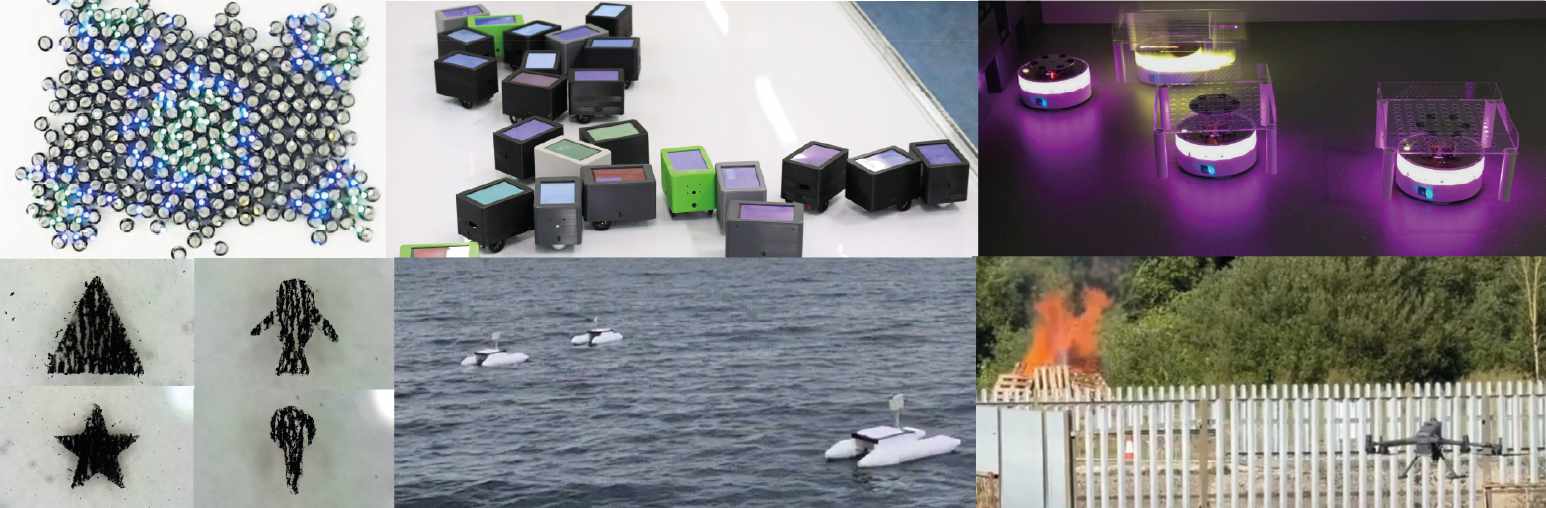
Robot swarms across scales

We will present a range of robot swarms, from the MagniDOME platform for spatio-temporal magnetic and light control of microrobots, to centimetre-scale Kilobots, and our latest DOTS, NODES, and TILE robots. [link]

Twist Bioscience - Changing How We Explore Sequence Space In The AI Era

Learn about how Twist Bioscience is supporting bioengineers in creating the biotechnologies of the future. [link]